
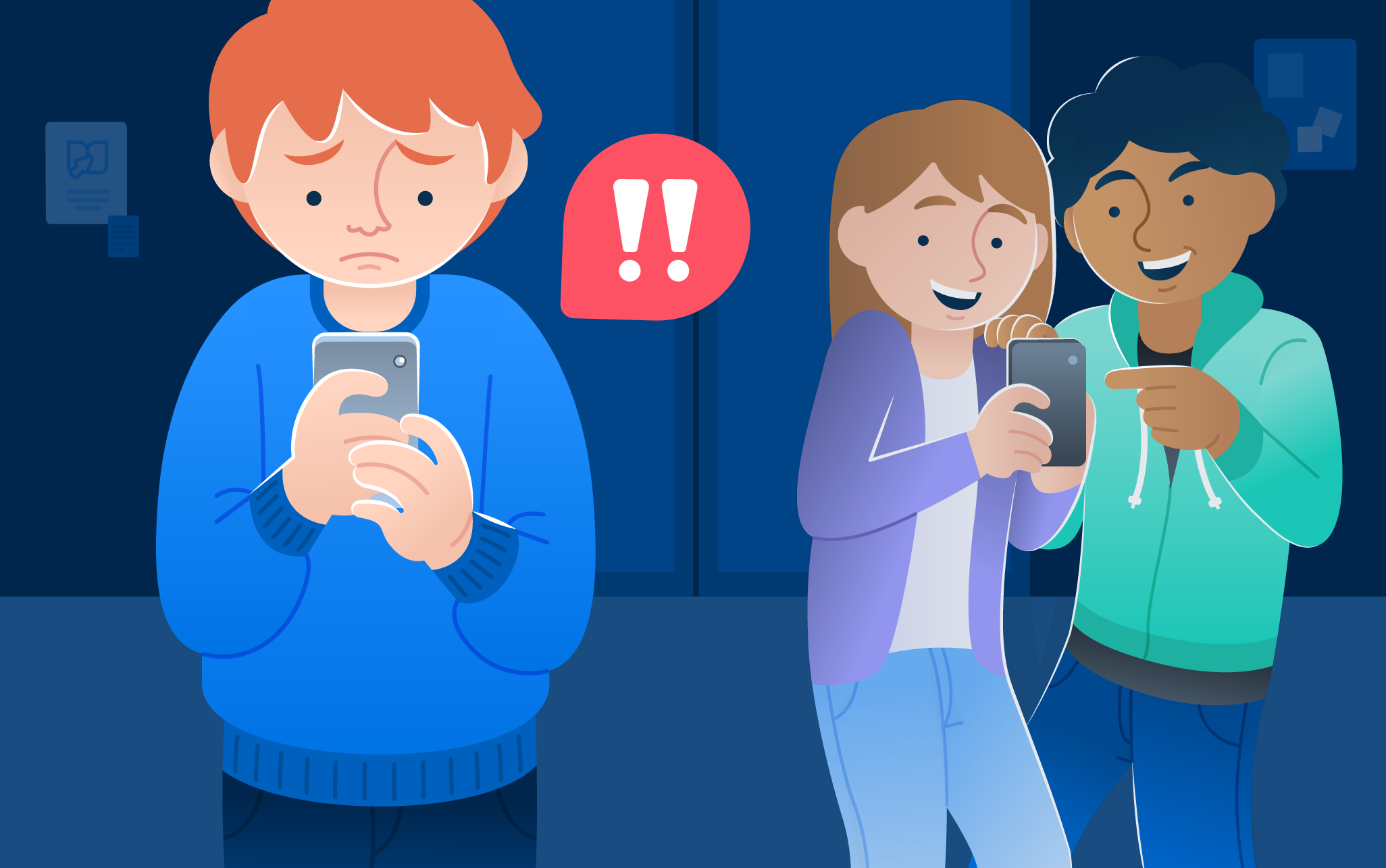
National Bullying Prevention Month is recognized each October in the U.S. On a global scale, October 6, 2025, will mark the 19th annual World Day of Bullying Prevention. Whether you take a single day or an entire month to focus on reinforcing anti-bullying measures, the time and effort are well worth it. We know that bullying can create anxiety and depression in students, as well as hurt their academic performance. The link between cyberbullying and the risk of suicide is also well documented.

To provide more context around the magnitude of the problem, the Youth Right Now survey found that four in 10 students aged 9 to 18 reported being bullied on school campuses during the past year alone. Nearly two in 10 students (18%) reported being cyberbullied specifically.
Of those students who experienced bullying of any kind, 38% did not tell an adult what they experienced. This puts even more of the onus on school leaders, teachers, parents, and caregivers to take proactive steps to prevent bullying and educate themselves to recognize the signs of cyberbullying.
Because cyberbullying happens online and on personal devices, it is much harder to detect than traditional bullying. Having an understanding of where and how cyberbullying occurs will help you know what to look for.
10 types of cyberbullying you need to be aware of

1. Social Exclusion
Social exclusion is the act of intentionally leaving someone out. A child might be obviously excluded from a group or party that “everyone” is talking about or included in, or left out of message threads or conversations that involve mutual friends.
2. Harassment
Harassment is a broad category that can apply to many instances of bullying and cyberbullying. However, the PACER Center, which supports children and young adults who have disabilities and operates the National Bullying Prevention Center, suggests that there’s a difference between bullying and harassment. While bullying includes actions that hurt or harm another person physically or emotionally, when the victim is part of a protected class, including race, religion, sex, disability, and other characteristics, then the bullying behavior is harassment.
3. Outing or Doxing
Outing, also known as doxing, is the act of revealing sensitive or personal information about someone without their consent to cause them harm or humiliation. In the case of cyberbullying, doxing might entail exposing sensitive photos of a person without their permission or sharing an individual’s private messages publicly, such as in an online chat group.
4. Trickery
Trickery is similar to outing, with an added element of deception. In these situations, the bully will befriend their target and lull them into a false sense of security. Once the bully has gained their target’s trust, they abuse that trust and maliciously share the victim’s secrets and private information with others.
5. Cyberstalking
The Cyberbullying Research Center offers this definition of cyberstalking: “the use of technology (most often, the internet) to make someone else afraid or concerned about their safety.” A particularly serious and potentially harmful form of cyberbullying, cyberstalking is a federal crime punishable by prison time and steep fines. Examples of cyberstalking include:
- Making threats via text, instant message, email, or social media
- Using sensitive photos or information to demand sexual favors (aka sextortion)
- Tracking a person’s online movements and actions
- Posting harassing or threatening statements about a person on social media
6. Fraping
Fraping is a combination of the words “Facebook” and “rape.” No longer limited to Facebook alone, fraping occurs when a bully gains control of someone’s social media account and posts content intended to humiliate or embarrass the victim.
While fraping is sometimes a harmless joke played on a friend who’s unknowingly left their phone or computer open to access, when it is done with malicious intent, fraping can be particularly harmful to the victim if it threatens their self-identity, harms their personal reputation, or violates social norms.
7. Masquerading
Masquerading is similar to fraping. However, instead of assuming control of another person’s account, masquerading is the act of creating a fake online profile or identity and impersonating someone without their consent. It often includes creating a made up email account or social profile, then sending or posting harmful or humiliating content.
8. Dissing
Dissing refers to the act of a bully spreading cruel information about their target through public posts or private messages to either ruin their reputation or relationships with other people. In these situations, the bully tends to have a personal relationship with the victim, either as an acquaintance or as a friend.

9. Trolling
Trolling is when a person intentionally tries to incite negative reactions by posting inflammatory or attacking comments online, such as in a Reddit thread or a social media group. Trolling is a form of cyberbullying when it’s done with malicious and harmful intent. Trolling bullies tend to be more interested in creating conflict generally and don’t have a personal relationship with their victims.
10. Flaming or Roasting
Similar to trolling, flaming (or roasting) is a more personal and direct attack on an individual, typically done in a social setting, such as a social media group or chat forum. Flaming is typically characterized by using profane language and insulting comments with the intent of intimidating the victim.
What schools can do to prevent cyberbullying
Heartbreaking stories about children who’ve died by suicide after experiencing cyberbullying reinforce the urgency to prioritize bullying prevention, including specific cyberbullying measures. However, while the signs of in-person bullying are often visible, cyberbullying can be much harder to detect.
Understanding the various types of cyberbullying is a great first step. There’s more that can be done to address cyberbullying, though.
Click here to learn about revolutionary technology tools that are helping school districts detect and quickly respond to cyberbullying risks and other threats to student safety and wellness. Or reach out and see how Securly can help your school today.
If you or someone you know is a victim of cyberbullying, help is available. Visit StopBullying.gov for a comprehensive set of resources.
Editor’s Note: This blog post was originally published in October 2018. It was updated in July 2025 to reflect the most current cyberbullying information.
FAQs
What is cyberbullying?
Cyberbullying is the intentional and aggressive use of electronic communication – like messaging, social media, email, or gaming chats – to harass, humiliate, threaten, or exclude someone, often repeatedly over time. It differs from fleeting conflicts because it is persistent and often targets individuals who struggle to defend themselves. Victims may face anonymity from the bully, and harmful content can spread rapidly and linger online.
What are examples of cyberbullying?
Cyberbullying can take many forms. Common examples include:
- Harassing or hateful messages and repeated insults
- Social exclusion: Leaving someone out of group chats or blocking them purposefully
- Impersonation: Using fake accounts to defame someone
- Doxxing: Sharing private personal information like addresses or phone numbers
- Cyberstalking: Relentless monitoring or threatening messages
- Sharing embarrassing images or messages (like trickery or fraping)
- Hate raids and organized mass harassment
- Sextortion: Coercing someone into sharing intimate content under threats
How can cyberbullying be prevented?
Prevention requires combined digital safety strategies and community effort:
- Educate and empower students, parents, and staff about cyberbullying tactics and healthy online behaviors
- Promote digital citizenship: Teach respect and empathy in virtual spaces
- Enable technical controls: Use tools like web filters, monitoring platforms (like Securly Aware), and strong privacy settings
- Encourage reporting: Make it easy and safe to flag abusive content
- Support victims: Offer counseling and peer-support programs
- Analyze trends: Monitor incidents and adapt policies accordingly
What are the effects of cyberbullying?
The impact of cyberbullying can be deep and lasting:
- Emotional distress like anxiety, depression, social withdrawal, and lowered self-esteem
- Declining academic performance and school avoidance
- Physical symptoms like sleep disturbance, appetite changes, and headaches
- In extreme cases, self-harm and suicide – especially when victims lack support
What are signs of cyberbullying to look out for?
Watch for these red flags:
- Avoidance behaviors: Skipping school, clubs, or social events
- Unusual device usage: Either excessive secretive use or sudden digital withdrawal
- Emotional symptoms: Depression, anxiety, or unexplained sadness
- Academic decline: When performance drops unexpectedly
- Distress after going online: Visible upset or agitation post-screentime
For more details on spotting the signs of cyberbullying, read our dedicated blog.
How can I report someone for cyberbullying?
If cyberbullying is suspected or identified, immediate and multi-layered action is key:
- Save evidence: Take screenshots, message logs, and URLs
- Report on-platform: Use flag/report tools on social media, messaging apps, or game servers
- Alert school authorities (especially when victims are students or incidents occur via school services)
- Contact parents/caregivers: Ensure victims and families are aware and supported
- Escalate to law enforcement: If threats, stalking, doxxing, or sextortion arise, or if local laws classify it as harassment
- Use third-party support: Non‑profits like StopBullying.gov or local hotlines can provide guidance and assistance.


[…] To some who seems these as ‘harmless’ to portion of people; there are other types of cyberbullying out there that can crosses the line into unlawful or criminal behavior and it is important. These types of criminal behaviour including sexual harassment online, harassment, calling names, impersonating and many more. […]
I think this covers a big topic on online cyber bullying, many people could be doing these right now and not realize it. I think it’s a great topic to talk about and that everybody needs to realize it.
This blog is really helpful. # Thank youbfor your genuine support.